
Canada's air force doesn't have enough people to run two fighter programs, says retired lieutenant general
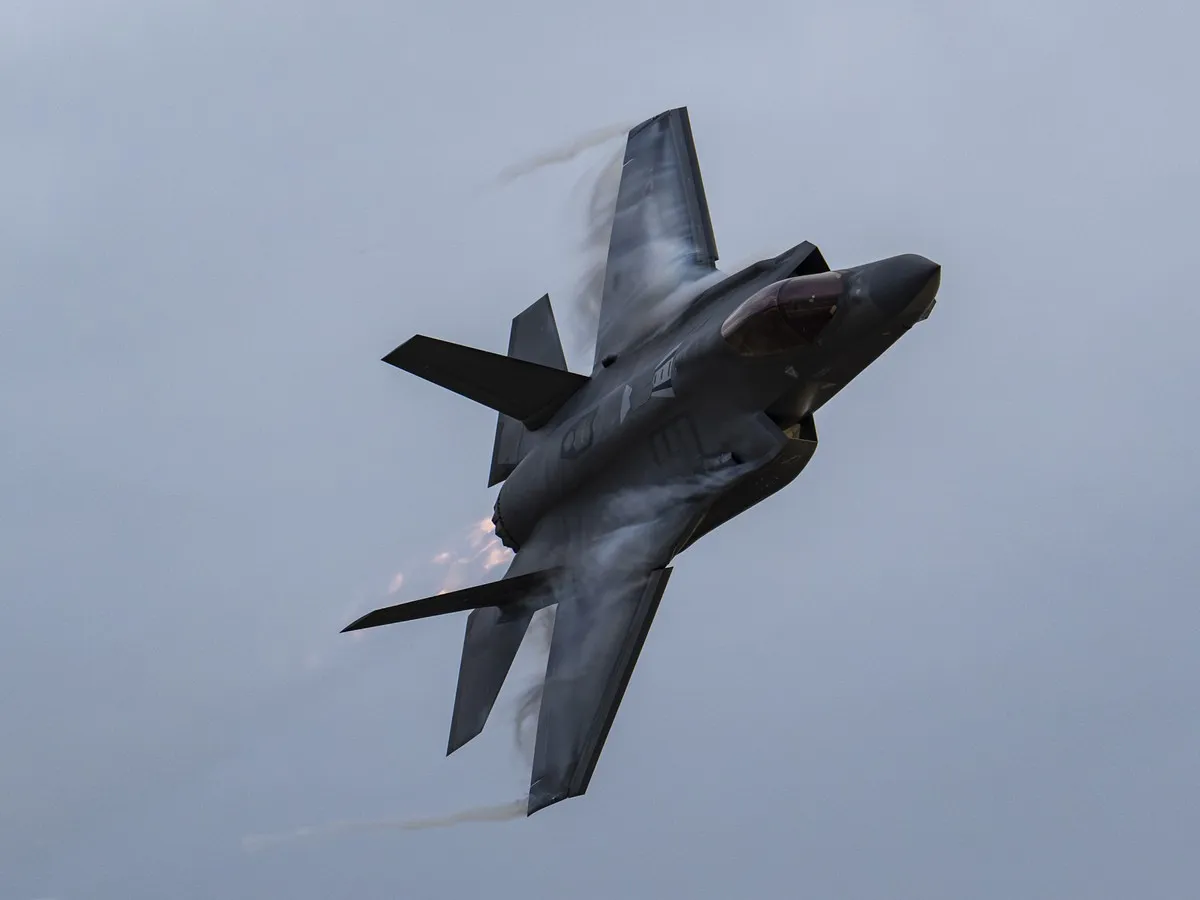
Alain Pelletier can still remember that new plane smell when he first climbed into the cockpit of a CF-18 more than three decades ago.
The retired Royal Canadian Air Force lieutenant general, who was deputy commander of North American Aerospace Defense Command (NORAD) in Colorado Springs from July 2020 until June 2023, knows what it takes to get a new fleet of fighter aircraft up and running. He thinks the Royal Canadian Air Force (RCAF) would be stretched thin for pilots, technicians and trainers if ordered to double that effort for a combined fleet of American-made Lockheed Martin F-35s and Saab Gripen-E fighters.
“Having two fleets of fighters is a challenge for any air force,” Pelletier said in a recent interview.
He is slated to speak Tuesday at The Mackenzie Institute’s Canadian Arctic Conference in Toronto to address Canada’s acquisition of new fighter aircraft, and the roles that they might play in northern defence.
Canada already has a shortage of men and women to fly and maintain its jet fighters, he said. “If they do go that route,” with a dual fleet, “the RCAF will suffer in the short (term) because you need to be able to transition to that new fleet, but now you’re transitioning not to a single fleet, you’re transitioning to two new fleets at a time when you’re just short of people. You cannot duplicate people. You cannot clone people. So, it will be a growing pain.”
With the CF-18s heading for retirement in 2032-33, Prime Minister Mark Carney’s Liberal government, in the midst of a trade war with the United States, hasn’t revealed the outcome of a review of their planned replacement — 88 F-35 fighter jets, manufactured by U.S. defence giant Lockheed Martin.
While Ottawa has placed a firm order for 16 F-35s and has begun paying for critical equipment for 14 additional aircraft, there’s no word yet on how many of the stealth fighters this country will ultimately buy.
Meanwhile, the Carney government is talking about supplementing the fighter jet numbers with Swedish defence giant Saab’s Gripen.
Canada has evaluated its options twice and chosen the F-35 both times, Pelletier said.
“I’ve had a chance to look at all the contenders that are out there on at least two occasions,” he said. “I think that the F-35 was a good decision, a decision that is reflected by our NATO partners.”
The U.S., the United Kingdom, Australia, Denmark, Finland and Norway have all gone with the F-35, he said.
“I think it is the right choice. It’s the choice that will carry operational capability for the next 30 years or so.”
The F-35 stands out, Pelletier said, for technology that allows pilots to glean information from their own fighter’s sensors, as well as those of other aircraft, warships and satellites, all “fused into a single picture,” to get a better idea of what’s going on.
“Having been a pilot, that is crucial to mission effectiveness,” he said. “You’re able to sense a threat that is out there before it can sense you.”
Pelletier, who flew combat missions in the Balkans, said the unexpected can hurt a fighter jet pilot’s survivability.
“The more variables that you control, the better it is for any fighter pilot,” said Pelletier, who is slated to speak Tuesday at The Mackenzie Institute’s Canadian Arctic Conference in Toronto.
Russia and China both pose a military threat to Canada’s sovereignty in the Arctic, he said.
“They don’t come into Canadian air space because they are following rules, but they are coming close to Canadian air space,” Pelletier said.
Russian aircraft will fly close to North America’s air defence identification zone that covers the airspace surrounding the United States and Canada, then turn so their flight path parallels that line, he said.
“They have the ability to actually come much further south,” Pelletier said. “They will continue their flight until they see a reaction from NORAD, whether it be the Canadian or U.S. air force assets responding to their presence.”
Chinese aircraft have also come close to Alaskan air space during exercises in recent years, he said.
Both Canada and the U.S. will often scramble fighter jets to intercept potential intruders, Pelletier said.
“The air threat is only one piece of the all-domain threat that Russia and China could actually exploit,” he said, noting Canada must also watch out for cyber- and sea-based threats.
“We’ve had the Canadian Navy monitoring transit of what China calls research vessels that have dual-use capabilities,” Pelletier said, noting they can be used for both civilian research and military intelligence gathering.
“We’ve had Russia positioning cruise missiles off of their coast, which is in proximity to Alaska, and those cruise missiles can actually reach into Alaska and the northern part of the Yukon.”
Russia also has intercontinental ballistic missiles that could reach both Canada and the U.S. through the Arctic, he said.
The development of hypersonic missiles “that have the ability to go five times the speed of sound,” and drones that can be launched off ships also pose a threat, Pelletier said.
“That’s why in NORAD we had to prepare for all-domain awareness, scanning not only the traditional air corridors, but also the sea routes and having an understanding of what may be coming our way.”
Our website is the place for the latest breaking news, exclusive scoops, longreads and provocative commentary. Please bookmark nationalpost.com and sign up for our daily newsletter, Posted, here.
Related Stories
 Canada
Drones strike Black Sea ships as rescue effort unfolds
13 minutes ago
 Canada
Trump’s ambassador to Greece, Kimberly Guilfoyle, resigns after allegations of improper conduct
13 minutes ago
 Canada
Part of Ontario to move to permanent daylight time. Here’s where
13 minutes ago
 Canada
Toronto cyclists ask Canada's top court to weigh in on Ford's bike lane removal plan
13 minutes ago
 Canada
Canada trade ties run deep in Republican strongholds. But will it matter to Trump?
13 minutes ago
 Canada
Orléans canoe club facing financial woes trying to stay afloat
14 minutes ago
 Canada
Six Flags temporarily closes 9 roller
1 hour ago
 Canada
Posthaste: How did Canada dodge collateral damage in one of its worst housing corrections ever? Maybe it didn't
1 hour ago