
Canada is an international darling. Will recent diplomatic moves hurt its reputation?
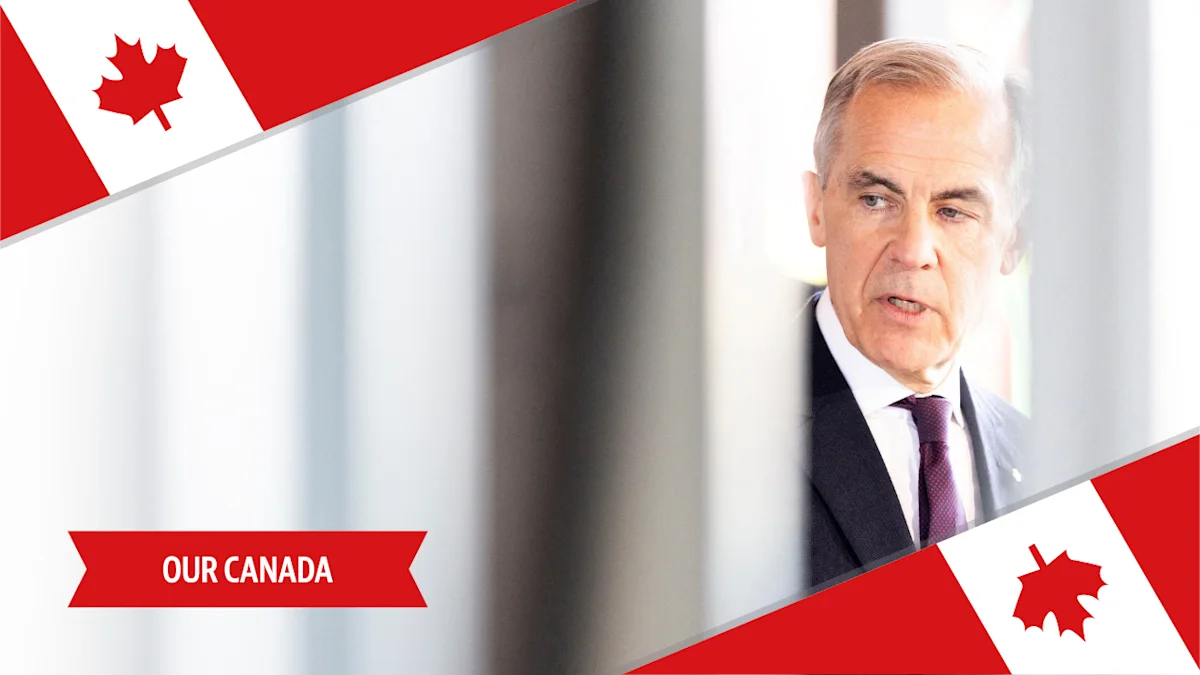
Canada has long been a country admired by the rest of the world for its quality of life and soft power. But since Israel's war on Gaza, as well as Israel and the United States' attacks on Iran, some in Canada have criticized the country for its response to conflicts worldwide — especially in comparison to its much more forceful stance on Ukraine.
Yahoo Canada sat down with two international affairs experts to break down Canada's response to each conflict, and the resulting hit to its reputation. They also shed light on a secondary question: Do Canadians even care about international politics? Recent polls suggest that a majority of Canadians don't rank foreign affairs in their top issues.
There's a reason why Canada's response to Ukraine has been much more intense by comparison, says Dr. Adam Chapnick, who teaches Canadian foreign policy and strategic decision-making at the federal level at The Royal Military College in Toronto. "Canada has an interest in a rules-based order where the basis for that order was that sovereign countries can't invade other countries," he says. "If we lose that, there isn't much left in the basic order that is good for us as a country that doesn't have a particularly strong military and isn't overwhelmingly powerful economically. If might is right, then we just can't compete."
Therefore, Canada needs an international rules-based order to best prosper.
"We have a much better chance of competing," Chapnick adds.
He says the Russian invasion of Ukraine is quite possibly the most blatant violation of that system that there could be. "It's not being hidden — it's right out in the open. It's brazen. It's a deliberate invasion of Ukraine's sovereignty," he says. "If that's allowed to happen, there is no international order anymore. If Canada and its liberal democratic allies, who also benefit from that system, don't stand up to Russian aggression in Ukraine, there isn't much to stand up for, period."
There is a logic to responding aggressively in Ukraine, Chapnick argues. "The Russians have to be shown that you can't just take a country over because you feel like it."
There are many differences between Russia attacking Ukraine and the United States invading Iran, Chapnick says.
"With Ukraine, we are actually capable of doing something about it — as Canada and its Western allies together support Ukraine."
But pragmatism has other ideas. Actions are unlikely to have an effect in Iran, no matter what Canada does, so that's not a proper use of the limited resources we have. "It's also not going to please the friends you need when you can't solve things on your own."
As well, Canada doesn't have a lot of remorse for the Iranian regime, Chapnick argues. "We don't want international law violated but it doesn't bother Canadian interests if the regime was (or is) thrown … The fall of the Iranian regime doesn't hurt us in the way that the fall of the Ukrainian government does. It's ruthlessly pragmatic, but there is less incentive to do anything in Iran."
There is less incentive to do anything in Iran.
Regardless of Donald Trump's rhetoric about Canada, the U.S. remains an ally of Canada. "If you oppose an ally, you had better have everybody on board completely committed. Because you can't say to the United States we disagree with this, but let's be friends on this. The Americans aren't going to respond positively to that."
In this case, Canada and its allies have basically said that they don't like the Iranian regime, but we think international law should be applied and we'll leave it at that. "In the context of what is actually possible here, that's about all we can probably do," Chapnick says.
There might be values that are being compromised, but in terms of pure interests, we don't stand to gain anything by actively opposing the American situation in Iran.
When it comes to Israel's war in Gaza, the Canadian public isn't anti-Zionist, Chapnick points out. "The overwhelming majority of Canadians believe that there should be a Jewish state. So if the government were to take a position that was profoundly anti-Zionist, [that] would run counter to the views of Canadians."
Chapnick says that the Canadian public believes that Israel has the right to defend itself within the constraints of international law. "The Canadian government has been critical to the same extent as most of its European allies. If Canada's allies are imposing sanctions, we will as well, but acting on our own isn't going to have any impact whatsoever. It's just going to cause ill feelings with countries, who, on other issues, we get along with quite well."
Canada has sold arms to Israel. Even if it is morally wrong, it wouldn't change a thing if we stopped, Chapnick says. "Would it make a material difference to Israel? The answer is no. It would have zero effect."
He says it might make us feel good inside because we wouldn't be involved, but it would not change a thing. "That's the first thing. The second is that we would end up upsetting a whole bunch of countries that we need to work with on other things."
Not selling the small amount of arms —$14.6 million worth, according to reports — that we sell to Israel isn't going to change the situation in Gaza, Chapnick adds. "So if Canada wants to have an effect, that is not the way to go about it. If you're Canada, you don't do anything on your own. It doesn't work."
Even the sanction of settlers is done in conjunction with other countries. "Because when one country sanctions, it's very easy for the sanctions to be avoided. The more sanctions that countries impose at the same time, the more effective they are."
Obviously, the Canadian government isn't pleased with the situation in Sudan, but again, as a middle power, there is a limit to what Ottawa can do, Chapnick says. "If all our allies in some sort of coherent form decided to invest either in terms of defense or security or economic measures to do something about Sudan, my guess is that we would be there too."
Ottawa has demanded an immediate ceasefire in Sudan and committed to over $120 million in humanitarian aid. They've also implemented targeted economic sanctions against leaders of the Sudanese Armed Forces and the Rapid Support Forces.
"There is no doubt that Sudan is a human tragedy, but the world has unfortunately endured tons of these tragedies, historically," Chapnick says. "But, again, we can't go forward on our own with the situation there."
Roland Paris, professor of international affairs at University of Ottawa, dismisses the theory that Canada's reputation is failing internationally. "The most recent cross-national polls suggest that Canada has the most positive reputation of any country in the world," he says. "I think Mark Carney's rise to the role of prime minister and particularly his speech in Davos, has been noticed about Canada more than anything else."
If the question is about Canada's reputation, not only is it high, it has been bolstered because people outside of Canada have noticed Carney speaking about the importance of standing up for middle powers in a world of more aggressive greater powers, Paris adds.
Recognizing Palestine as a state is proof of that, he says. "Canada's position on Israel-Palestine is more or less aligned with European countries and not with the United States. I think, if anything, that Canada's position on Palestine, including the recognition of Palestine as a state, has been a shift in the Canadian position and a further shift in the Israeli position."
With regard to the Iran War, there's no question that Carney has made statements that have been offside. "His initial unqualified support for the attack on Iran for which he has to spend days clarifying when he faced a minor caucus revolt," Paris says. There was also his statement earlier this month about the war having been "worth it."
Those statements might have been pleasing to U.S. President Donald Trump, "but they're not aligned with where most Canadians are, not least his own party. But is that shaping Canada's reputation internationally?" Paris asks. "Not really."
For everyday Canadians, foreign policy isn't exactly at the top of the list of issues most important to them. "They tend to be bread and butter issues, especially when there's any kind of economic uncertainty," Paris says. "I don't think there's anything unusual about Canadians listing domestic priorities, including economic and social conditions, as the the top of the list."
OUR CANADA: Canada keeps slipping in world happiness rankings. Why are we so sad?
OUR CANADA: The Canada-U.S. relationship is strained. Must we wait for Trump to leave to mend it?
Chapnick believes Canadians aren't typically interested in international affairs because we haven't had a catastrophic event equivalent to 9/11, or any other similar incident that other countries have.
"Without that kind of catastrophic event, Canadians have a hard enough time as it is," he says in agreement with Paris. "The cost of living is going up and we're still dealing with inflation."
When it comes to international affairs, Canadians tend to have a differential approach to our government as opposed to other countries. "We assume, to some degree at least, that our government knows what it's doing," Chapnick adds. "So we're inclined to leave international affairs to the government more than other countries because we don't feel it as viscerally. We don't have that 9/11 trauma in the back of our minds all the time. So it's less likely that we're going to push the government on international files."
We're inclined to leave international affairs to the government more than other countries.
Canadians like to hear that their governments are calling out injustices. "Because Canadians don't pay a lot of attention, they don't notice when we do nothing about the injustice. If Canadians paid more attention, we would realize that the country isn't capable of doing as much as they think. If they did, governments would clean up their acts in terms of what they promise."
Pessimistically, the results would be very similar. "We can't do all that much about global injustices unless our allies are doing it with us."
At the same time, Paris says that Canadians have always been concerned about our relationship with the U.S. "That has always been recognized as a politically salient issue within domestic politics."
Still, Canadian recognize that the world order has changed, Paris says, though their interest might not span much further than our neighbours to the south.
"The United States becoming a much less dependable partner has proven that. I think that's an overlay for Mark Carney's government — it was the reason he was elected."
Our Canada is Yahoo Canada's series examining top-of-mind issues and how to move forward, according to leading experts in the country.
Related Stories
 Canada
Windsor residents react to thank you banner from Detroit on Thanksgiving
51 minutes ago
 Canada
'Chaos' outside Centretown drop
1 hour ago
 Canada
Canada 'stronger together' than apart, Carney says in Thanksgiving message ahead of Alberta visit
1 hour ago
 Canada
Gloucester Celtic FC crowned Soccer Canada's 2026 national champions
1 hour ago
 Canada
A giant pumpkin named Rocky gives a champion grower his California comeback
2 hours ago
 Canada
Demographic changes are reshaping Canada's economy
2 hours ago
 Canada
Rainfall warning issued for Montreal, Montérégie Tuesday
2 hours ago
 Canada
Rapid spread of invasive lizards on Vancouver Island could have 'serious' environmental impact: experts
2 hours ago