
Can a One
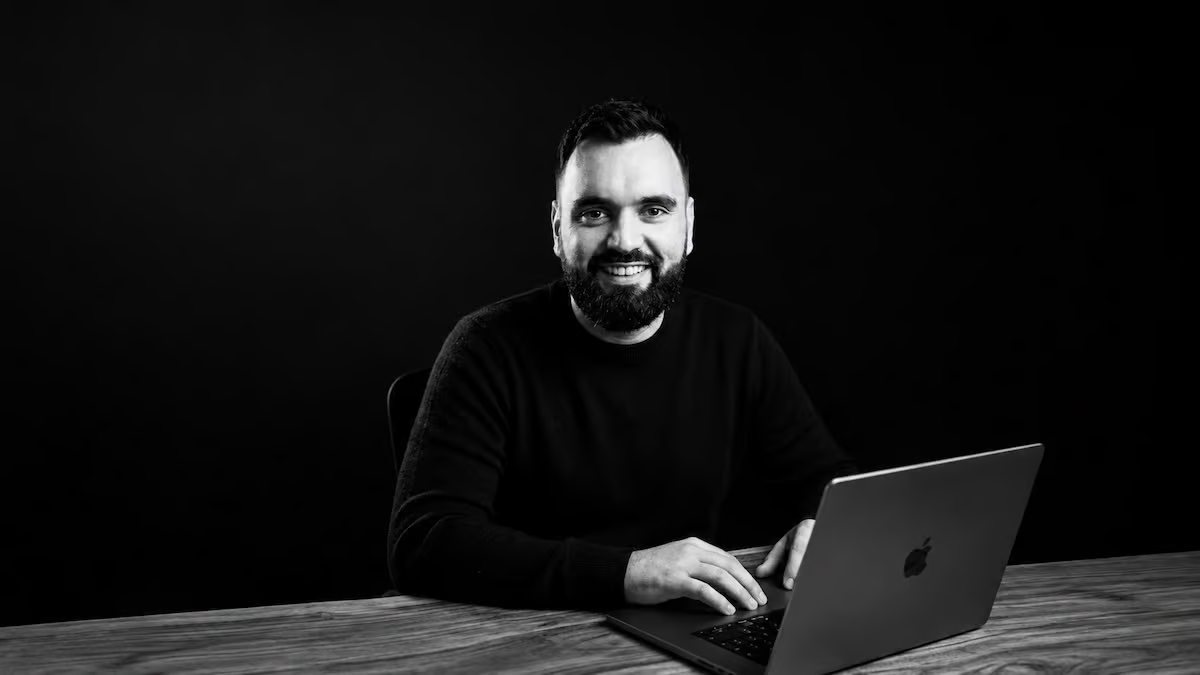
Vizura Studio founder Vedran Obradović explains why branding matters for technology companies and how he is building an international specialist studio from Zagreb.
I’m Vedran Obradović, founder and designer behind Vizura Studio®, a one man branding studio based in Zagreb, Croatia. I work mainly with B2B and technology companies across brand strategy, positioning, logo design, identity systems and digital experiences.
Vizura really came from wanting to build the kind of design business I personally would want to hire.
I never liked the idea of a client speaking to one person during sales, someone else during strategy, and then seeing the actual work passed further down the chain. I wanted the person making strategic decisions to also be the person designing the identity and speaking directly with the client.
Over time, that preference became the actual business model.
What interests me now is seeing how far a deliberately small studio from Zagreb can go internationally without pretending to be a much larger agency.
Because I think growth and headcount are two different things.
Creative businesses are often expected to follow the same path: hire more people, add account managers, create departments and eventually become an agency. I never really accepted that as the only definition of progress.
I wanted Vizura to grow through better work, stronger clients, larger problems, deeper expertise and more international reach.
A one man model also creates a very simple promise. The person you speak with at the beginning is the same person thinking through the strategy, designing the identity and caring about the final detail.
Fewer layers also mean less information gets diluted between stages.
Capacity is obviously more limited, but I would rather solve that problem carefully than make the business bigger simply because bigger is supposed to mean more successful.
So I’m not keeping Vizura small because of a lack of ambition. I’m testing whether ambition can look different.
For me, strong branding is not about making a company look expensive. It is about making the company easier to understand, easier to remember and easier to trust.
B2B and technology companies often sell something complex, invisible or technically difficult to evaluate quickly.
Buyers usually cannot inspect an entire product before forming an opinion. They are already judging the company through its website, messaging, visual identity, presentation and overall consistency.
Startups sometimes treat branding as a cosmetic layer that can be added once all the “serious” work is finished. I think that underestimates how much perception affects growth.
A company can have an excellent product and still create unnecessary friction if it looks unclear, generic or less mature than the technology behind it.
Good branding helps close that gap between actual capability and perceived capability.
One of the biggest problems is sameness.
Technology companies are often surrounded by the same references, same competitors and increasingly the same AI generated inspiration. Everyone wants to communicate intelligence, speed, innovation and trust, so entire categories gradually start using the same visual language.
Complexity is another major challenge.
Technical teams usually understand exactly why their product is exceptional, but a lot of that difference gets lost by the time someone encounters the company from the outside.
I have recently worked across projects including heyMirai, Deepsea Networks, Verticomm, Talentix, Breach.ai and Soldered Electronics. The industries and products are different, but the underlying problem appears surprisingly often.
Companies know what makes them different internally. Branding has to make enough of that difference visible externally without reducing a sophisticated product into vague marketing language.
Earlier than most founders think, but that does not necessarily mean investing in a huge branding project on day one.
Early on, clarity matters most. Who is this for, what problem are we solving, why should somebody care and why are we meaningfully different?
A more complete identity system becomes increasingly important once the company starts asking the market for greater trust.
That moment might come when moving upmarket, raising capital, hiring important people, entering a more competitive category, approaching enterprise customers or simply reaching the point where the product has matured faster than the brand.
I see that last situation quite often.
Product, team and ambition evolve quietly while the brand keeps communicating the much earlier company.
Once the gap between what the business has become and what the market perceives becomes too wide, branding stops being decoration and starts becoming a business issue.
I normally begin by removing complexity before adding design.
Technology companies naturally want to explain everything because they have spent years building everything. Customers rarely need everything at once.
My first question is usually not what the logo should look like. It is what someone needs to understand within the first few seconds for the rest of the story to make sense.
Positioning, language and visual identity should then reinforce the same core idea.
Visual design becomes a kind of compression system. Typography, hierarchy, colour, imagery, motion and the logo all help communicate maturity, precision and character before someone reads a detailed explanation.
Trust rarely comes from one impressive element.
It comes from many small signals consistently agreeing with each other.
The internet removed geography much faster than it removed perception.
Technically I can work with a company almost anywhere, but that does not automatically mean an international client will trust a designer in Zagreb with an important part of their business.
A lot of the work has therefore been about reducing that distance through portfolio quality, communication, positioning and the way Vizura presents itself.
Platforms such as Upwork played an important role earlier because they created access to international companies that would otherwise have been much harder to reach.
Every strong project then becomes another piece of proof.
My goal now is to make Vizura itself visible enough that geography becomes interesting context rather than something that needs to be overcome.
I actually like building the studio from Zagreb. I do not think somebody has to move to London, New York or San Francisco before they are allowed to think internationally.
Speed of understanding is probably one of the biggest advantages.
When the same person hears the founder explain the problem, develops the positioning, explores the identity and builds the final system, very little information disappears between stages.
Decision making is also faster because there are fewer layers of interpretation.
Accountability becomes very clear too. There is nowhere for work to disappear inside the organisation. If a decision is good, I made it. If something is wrong, it is also mine to solve.
Specialisation matters just as much.
I would rather become exceptionally useful to a narrower type of client than moderately useful to everyone.
For Vizura, that increasingly means B2B and technology companies where clarity, trust and perceived maturity genuinely affect business outcomes.
I do not think this model is automatically better than a large agency. Some projects genuinely need large multidisciplinary teams.
But many companies are looking for senior thinking, direct collaboration and speed more than organisational size.
Capacity is the obvious challenge.
When you are the strategist, designer, project manager, salesperson and studio owner, growth cannot simply mean putting more projects into the calendar.
That forces me to be disciplined about which projects I accept and sometimes means saying no to work that would look attractive financially in the short term.
Poor prioritisation also becomes expensive very quickly. If I spend three hours on something that does not matter, there is no larger team absorbing the mistake.
On the other hand, those constraints have made me much more conscious about systems, communication and how projects are structured.
The next challenge for Vizura is increasing leverage without destroying the reason the model works in the first place.
I’m much more interested in better systems, technology, selective partnerships and smarter processes than automatically turning the studio into a traditional agency.
AI is making execution abundant.
Concepts, images, copy and variations can now be produced at a speed that would have sounded ridiculous only a few years ago.
I think that is genuinely useful.
An interesting consequence appears when polished output becomes easier to create. Simply producing something polished becomes less valuable.
Value starts moving toward judgment.
Which idea is actually relevant? Which direction is ownable? What should the company avoid saying? Which visual choice is distinctive rather than fashionable? What will still make sense several years from now?
AI is very good at giving you more.
Branding often depends on knowing what to remove.
There is also a real risk of companies using the same models, prompts and reference pools gradually moving toward the same average aesthetic. Parts of AI and SaaS already show signs of that.
So I do not see human expertise disappearing. Its value is shifting further toward taste, context, decision making and responsibility for the final answer.
I want Vizura to become more specialised, more recognised and more international without becoming unnecessarily complicated.
The direction is increasingly focused on B2B and technology brands, especially companies where trust, complexity and differentiation are real business problems rather than purely aesthetic ones.
I also want the studio to become known for a point of view, not only for a portfolio.
That means publishing more, contributing to conversations around branding and technology, building stronger case studies and creating visibility beyond platforms where somebody is already actively searching for a designer.
Growth for me would mean better projects, stronger relationships, greater reach, smarter systems and more intellectual property around the way I work.
There may absolutely be specialist collaborators and partners around Vizura as projects become more ambitious, but I want to protect the direct relationship between the client and the person responsible for the thinking and work.
I would rather build an extremely strong specialist studio than a larger agency simply because larger sounds like progress.
International credibility is usually built one project, one relationship and one piece of proof at a time.
That has probably been one of the biggest lessons for me personally.
Zagreb is where Vizura is based. It does not have to define the boundary of what Vizura can become.
Thank you Vedran Obradović for the Interview
Statements of the author and the interviewee do not necessarily represent the editors and the publisher opinion again.
Related Stories
 Technology
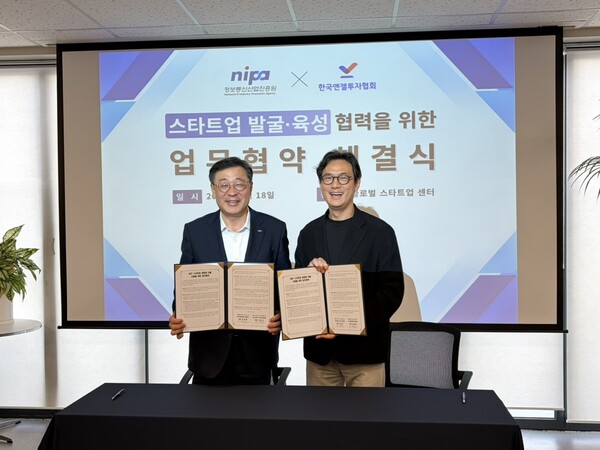
NIPA, Korea Business Angels Association to cooperate on AICT startups' global expansion
58 minutes ago
 Technology
TAIEX Ends Near Record High as Tech Stocks Rally
59 minutes ago
 Technology
Top stocks in news: Lenskart, Nestle, Hy
1 hour ago
 Technology
South Korean Startups Overhaul Southeast Asia Strategy, Shift Focus to Singapore
2 hours ago
 Technology
Technip Energies will license SABIC’s plastic technology worldwide
2 hours ago
 Technology
Align Technology stock heads into the open after a 1.40% drop - ad
2 hours ago
 Technology
The Walt Disney Company Names Karandeep Anand to Newly Created Role of Chief Technology Officer
2 hours ago
 Technology
Ideal Rebrands as AVBuddy Integration Following Buyout
3 hours ago