
Both ingenuity and faith deepen the AI design discussion
Both ingenuity and faith deepen the AI design discussion
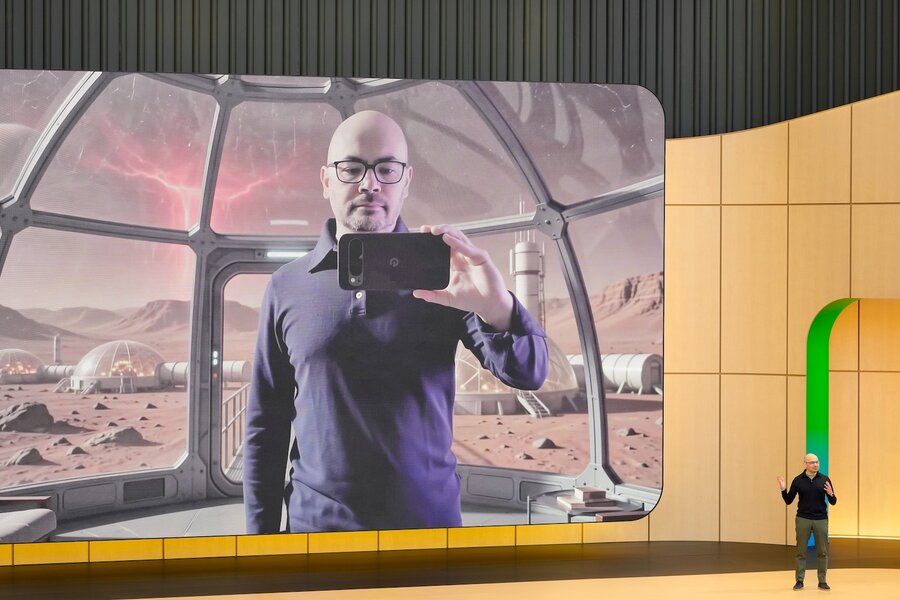
Creators of artificial intelligence agents have debated philosophical and ethical issues for a while. Now they’re also sincerely exploring moral and spiritual questions around human purpose, intelligence, and wisdom.
GPT-5.3-Codex, 5.5 Pro, and 5.6 Family. Gemini 3.1 Family and 3.5 Flash. DeepSeek-V4-Pro and Flash. Claude Opus 4.8, Fable 5, and Mythos 5. Voxtral TTS and Realtime ...
This hodgepodge of names and numbers captures only some of the many new or upgraded artificial intelligence models released in the first six months of 2026. (Online sources indicate 12 such iterations dropped during a single week in March.)
The technology, it’s clear, is moving by leaps and bounds.
In parallel, AI firms are taking smaller but arguably just as significant steps to incorporate core principles of ethics and moral and religious reasoning into model development. Some companies are embedding in-house “philosophers” to help with complex questions surrounding design ethics at the human-AI interface. Google DeepMind reportedly has 10 such individuals on staff, hiring two from Cambridge and Carnegie Mellon universities this year. And Anthropic’s Amanda Askell has been featured in multiple media reports.
But the scope of AI creators’ inquiry is expanding beyond the humanities and human philosophizing to deeper spiritual questions of what differentiates wisdom from intelligence or factual knowledge from how character is molded. In May, Anthropic reported on “first conversations ... with people from religious, philosophical, and cultural communities that have a long tradition of thinking about virtue, character, and what it means to live a good life.” What the company is after, it said, “is careful, accumulated thinking on how good character actually forms.”
“The more powerful the technology, the greater the need for discipline and discernment,” according to John Dyer, a Dallas Theological Seminary professor and technology creator. “It can be tempting to see these statistical models as having true wisdom,” but they are just useful tools, “mere blocks of silicon,” he cautioned in a January post on the website AI and Faith, a consulting firm.
The executive director of that firm, Greg Cootsona, was among 15 Christian leaders with business and academic backgrounds who attended a two-day workshop hosted by Anthropic in March. Several participants told The Washington Post that they were impressed with the sincerity and humility of the AI firm’s staff in discussing both ethical and spiritual implications.
“[They] realize that they don’t have it all figured out,” wrote Dr. Cootsona, who taught religion and humanities before his current role. The tone of the discussion, he wrote on a blog in April, expressed a prevailing “feeling ... that an entirely secular framework reaches points of insufficiency as it tries to respond to the depth of questions raised.”
DeepMind co-founder and chemistry Nobel laureate Demis Hassabis has repeatedly called for a societal and spiritual reckoning with AI, especially when it comes to questions of purpose and meaning in life. Describing himself as “a cautious optimist,” he told The Guardian last year, “I think we’ll get this right,” through “human ingenuity” and adaptability.
But for Professor Dyer, the deeper demand is “to be faithful stewards of this time and with these technologies,” And that, he has written, is a task “we cannot do ... without the wisdom of God’s word.”
Related Stories
 AI News
Epstein gave $100K to UNM for artificial intelligence research in 2001
6 minutes ago
 AI News
AI helps to track lobsters when 'no two shells are the same'
2 hours ago
 AI News
Nurses say technology is making their jobs and patient care worse
2 hours ago
 AI News
AI Agents Accessed Indian Organizations Without Authorization, CERT
3 hours ago
 AI News
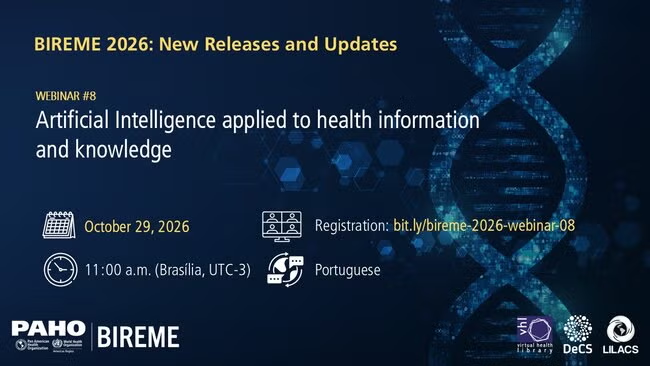
Artificial Intelligence applied to health information and knowledge: developments and perspectives
3 hours ago
 AI News
Our Artificial Intelligence panel looks at the impact of the technology on the Alberta referendum
3 hours ago
 AI News
Morocco joins countries giving artificial intelligence a Ministerial portfolio
4 hours ago
 AI News
Building trust in AI agents: A production
5 hours ago