
BMRT has developed a technology for detecting explosives using drones

BMRT has developed a technology for detecting explosives using drones
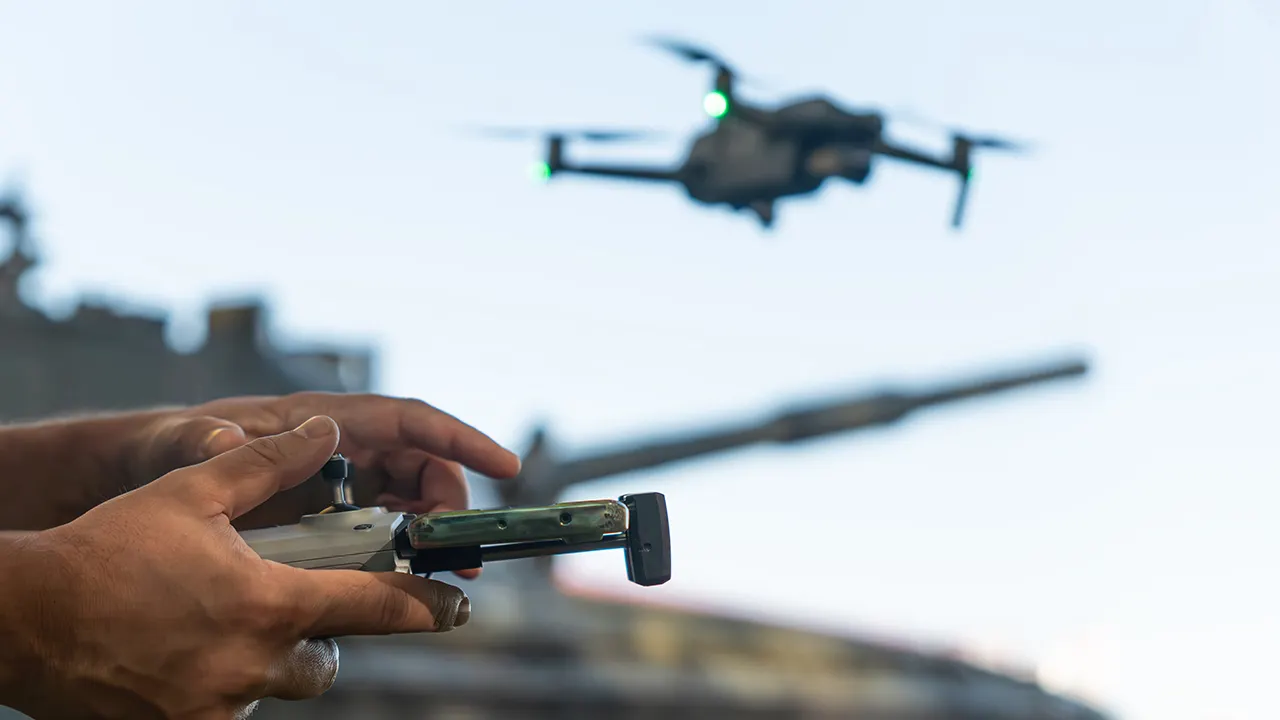
The American innovation company Base Molecular Resonance Technologies (BMRT) has developed a revolutionary molecular resonance technology that enables the remote detection of explosive payloads in drones.
The new development is designed to help the military clearly distinguish between strike drones and cheap decoy drones.
At the heart of this promising development lies a unique method for capturing the molecular resonance characteristics specific to certain chemical compounds, materials, and explosives.
A special scanner remotely captures this unique molecular “signature,” accurately determining the object’s composition in the air. During testing, BMRT specialists successfully tracked and identified nitrocellulose powder.
A standard 9-mm cartridge mounted on the fuselage of a fiber-optic drone served as the test subject. The device clearly detected the presence of gunpowder while the drone was at an altitude of over 60.9 m.
This is currently the maximum performance indicator assessed by engineers.
The emergence of such a tool is of paramount importance in the modern drone era. Starting in 2024, Russian occupation forces began mass-deploying cheap long-range “Gerbera” UAVs during airstrikes against Ukraine.
In terms of their form factor and appearance on radar screens, they are identical to the “Shahed” strike drones, but they often serve as decoys—flying without any warhead at all.
The main purpose of these decoys is to wear down Ukrainian air defense systems by forcing them to waste expensive anti-aircraft missiles on decoys. At the same time, the “Gerberas” conduct electronic reconnaissance and reveal the locations of our radar stations.
Under ideal conditions, absolutely all aerial targets must be shot down, as even an empty drone falling in a city causes significant damage.
However, given the global shortage of anti-aircraft missiles for air defense, a clear understanding of which specific drone is carrying lethal explosives will allow for proper prioritization when repelling massive waves of attacks.
Despite its revolutionary nature, BMRT’s development is currently quite “raw” and in the early stages of research. The main drawback of the technology is its operational range.
A ceiling of 60 meters is too low to establish an effective defense layer, as attack drones typically operate at significantly higher altitudes.
This is reported by Defense Express.
Russia is developing faster drones to strike Ukraine
Less than 29.5 million people live in territory controlled by Ukraine, according to a study.
Ukraine’s population is rapidly shrinking, and experts’ forecasts are becoming increasingly alarming.
We have also previously reported that 29 million people currently live in Ukraine. Our country is no longer the second-most populous country of the former USSR.
Related Stories
 Technology
IFF develops Aquascent, a new water
15 minutes ago
 Technology
Community Day celebrates connection, innovation and impact at Ontario Tech
15 minutes ago
 Technology
AWS seeks to automate cloud optimization with new AI agent
15 minutes ago
 Technology
LensStory Opens Melbourne Virtual Production Studio
4 hours ago
 Technology
Emerging tech has new Army leaders warning troops can't ‘AI’ their way to victory on the battlefield
5 hours ago
 Technology
Screen time limits not enough to tackle problematic social media use: experts
5 hours ago
 Technology
Investments in Europe's defense startups to exceed $10 billion
8 hours ago
 Technology
New Report: Bayh
8 hours ago