
Big investors shift away from U.S. markets
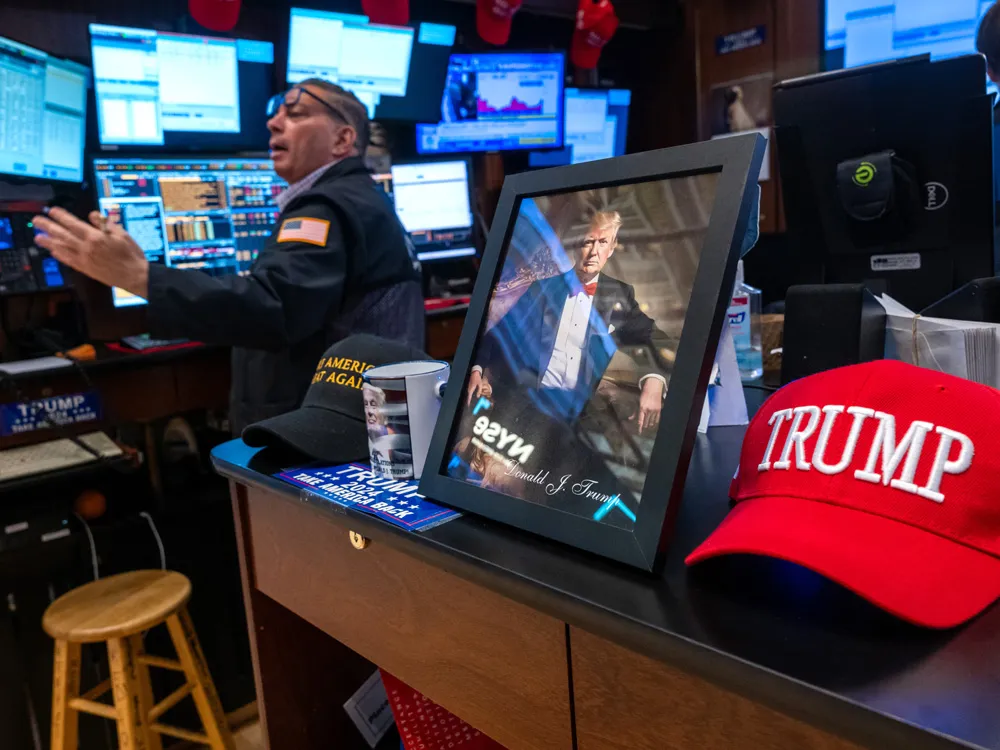
Big institutional investors are shifting away from U.S. markets as Donald Trump‘s trade wars and the country’s escalating debt fuel fears about the dominance of American assets in global portfolios.
The U.S. president’s erratic trade policy has shaken global markets in recent months, sparking a sharp sell-off in the U.S. dollar and leaving Wall Street stocks lagging far behind European rivals this year.
Trump’s landmark tax bill, which is forecast to add US$2.4 trillion to Washington’s debt over the next decade, has also increased pressure on U.S. Treasuries.
The move away from U.S. assets has pushed up European markets at the expense of their U.S. counterparts and has been signalled by surveys of big institutional investors’ allocation decisions. A poll of fund managers published by Bank of America last month showed the biggest underweight in the U.S. dollar in nearly two decades.
“People need to rethink” their exposure to the U.S., said Seth Bernstein, chief executive of AllianceBernstein L.P., which manages US$780 billion in assets.
“The deficit has been out there as an issue; it’s just getting worse,” he added. “I think it is untenable for the United States to continue borrowing at the pace it’s borrowing. … When you couple that with what’s going on with the unpredictability of our trade policy … it should cause people to pause and consider: How much do you want concentrated in one market?”
A top executive at a big American private capital firm described Trump’s so-called Liberation Day, when the president unveiled sweeping tariffs on Washington’s trading partners, as “a wake-up call to a lot of people that they were overweight the U.S.”
As institutional investors review the extent of their holdings in the U.S., Caisse de dépôt et placement du Québec, Canada’s second-largest pension fund, said recently it would reduce its exposure to the country, currently 40 per cent of its portfolio. It plans to increase investment in the U.K., France and Germany.
“The U.S. has been the best place in the world to invest for a century, but I’m starting to hear investors question whether U.S. exceptionalism is a little less exceptional, and think about whether to position their portfolios accordingly,” Howard Marks, co-founder of US$203 billion alternatives manager Oaktree Capital Management, told the Financial Times.
U.S. stocks have recouped the losses that followed Trump’s announcement of the duties on April 2. But the S&P 500 remains less than two per cent up this year, compared with nine per cent for the Stoxx Europe 600 index.
The dollar is close to a three-year low, down nine per cent this year, even though Trump has retreated on many of the tariffs he initially announced.
Investors say that the global dominance of the U.S. economy and the depth of its capital markets mean it will remain the premier destination for global investment.
Related Stories
 Stocks & Markets
Top Emerging Market Economies for US Investors in 2025
4 hours ago
 Stocks & Markets
Stock Market Investors Get an Urgent Warning From the Bond Market. History Says This Will Happen Next.
3 days ago
 Stocks & Markets
Oil drops below US$80 per barrel, while tech stocks weigh on a mixed Wall Street
3 days ago
 Stocks & Markets
Oil prices fall back to US$80 per barrel amid optimism over Mideast peace deal
3 days ago
 Stocks & Markets
Stocks climb on US
4 days ago
 Stocks & Markets
SpaceX IPO just sent a powerful signal to stock market investors
4 days ago
 Stocks & Markets
Global stocks soar and oil prices drop as U.S., Iran reach tentative deal to end war
5 days ago
 Stocks & Markets
SpaceX went public – Europe’s SpaceTech founders and investors have thoughts
5 days ago