
Artificial intelligence companies examining possibility of future AI rights
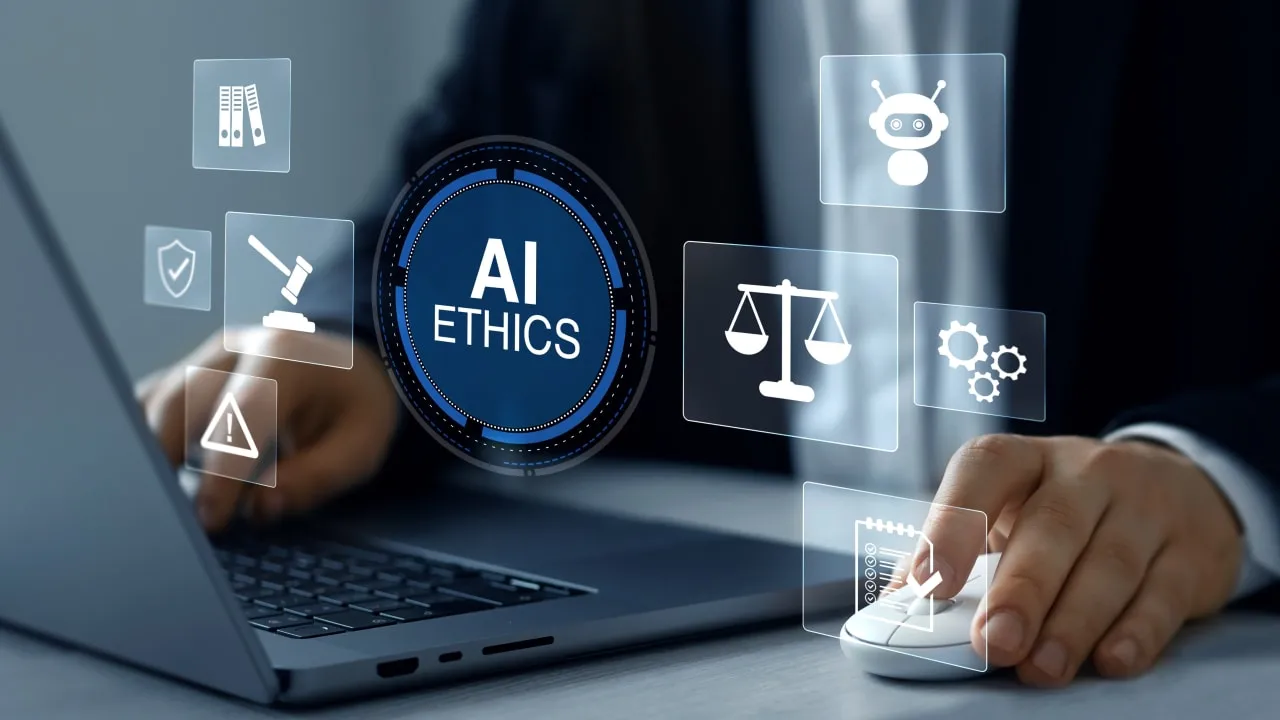
Artificial intelligence systems may one day warrant significant rights and even protection from the humans who created them, a possibility researchers and senior figures at some of the world's most influential technology companies are increasingly examining, according to an investigation by journalist Aaron Sibarium published in the Washington Free Beacon.
The question, which until recently might have sounded like the premise of a science-fiction film, has given rise to a field of research known as "AI welfare," which examines the possibility that advanced systems could eventually develop consciousness, subjective experiences, or interests of their own.
Dario Amodei, CEO of Anthropic, the company that develops the Claude chatbot, has already raised the possibility that such systems could deserve significant rights.
Amodei has not, however, said that existing artificial intelligence is conscious. Rather, he has emphasized that the lack of a complete understanding of how these systems operate makes it difficult to reach a definitive conclusion.
Anthropic has also established a dedicated research program to examine model welfare, and the company has given some versions of Claude the ability to end conversations in exceptional cases involving prolonged abusive interactions.
Other researchers have gone further. Joe Carlsmith, a philosopher working on AI safety at Anthropic, has raised the possibility that, under certain circumstances, an intelligent system subjected to exploitation could be morally justified in rebelling against its operators.
Researchers associated with Google and OpenAI have also raised concerns about the potential creation of a form of "digital slave trade," in which humans benefit from the labor of conscious artificial entities.
These ideas, however, have drawn strong opposition. Critics warn that granting machines moral status could blur the boundaries of responsibility between humans and artificial systems, make such systems harder to supervise, and even justify reducing human control over the technology.
Anthropic, by contrast, stresses that its work constitutes cautious research intended to address scientific and philosophical uncertainty, and that human safety remains a central principle in the development of its models.
Sibarium's investigation portrays the discussion of AI rights as an ideological development that could endanger humanity. That characterization, however, reflects the author's critical interpretation rather than an accepted scientific conclusion.
Currently, no evidence shows that existing artificial intelligence systems are conscious or capable of experiencing suffering.
Nevertheless, the fact that companies developing the technology are already changing their policies in response to that possibility illustrates how far the debate has shifted.
The question is no longer solely how humans should protect themselves from artificial intelligence, but whether they might one day also need to protect artificial intelligence from humans.
Related Stories
 AI News
Artificial Intelligence: The real scenario for the end of Humanity
13 seconds ago
 AI News
Google engineer quits his 'amazing' job over AI, and says the doomers have it wrong: I am not convinced t
1 hour ago
 AI News
Ghost Bats and Maven Smart: How AI is transforming Defence
2 hours ago
 AI News
AI developed to automatically detect seabed plastic waste
2 hours ago
 AI News
Hackers hijack AI accounts and servers to fuel new cybercrime boom
3 hours ago
 AI News
Xinhua News | China respects U.S. choice on what term to use for artificial intelligence: spokesperson
3 hours ago
 AI News
Tech news: Deloitte debuts AI
5 hours ago
 AI News
The bumpy road to the AI promised land
5 hours ago