
Artificial Intelligence: A Supply Chain Workforce Factor
Artificial intelligence (AI) is increasingly dominating global supply chain and continues to become part of supply chain routines even among Africa nations including Ghana; from demand forecasting to automated warehouse systems. For professionals in inventory management, logistics and procurement, AI tools are no longer experimental; they are quietly becoming part of how decisions are made and how performance is measured.
Many supply chain professionals say AI genuinely makes their work easier, particularly around forecasting demand, optimising routes and catching problems early (Attah et al., 2024). Where it falls short is in the more relational parts of the job, things like managing supplier relationships, which remain stubbornly human. Even as AI adoption grows, the tasks that depend on trust and negotiation are the ones AI still struggles to replace.
At the same time, becoming familiar with AI usage does not always translate into a deeper understanding of how it boosts productivity. Many professionals feel fine using AI dashboards and tools day to day but considerably less confident explaining the technical principles behind them (Akter & Kudapa, 2024), like how a machine learning model actually reaches its conclusions. Interestingly, this gap does not close simply through more frequent AI use. Individuals at advanced stages of AI adoption report no greater technical understanding than those who are just beginning to use AI, suggesting that genuine AI literacy requires deliberate training rather than mere exposure.
Perhaps the most striking insight is that workplace inclusion matters more for performance than the AI tools themselves. Employees who perceive strong organisational support, including transparent communication about AI, opportunities for diverse stakeholder participation in AI implementation and clear guidance on future AI initiatives, tend to exhibit higher levels of performance than those who lack such support (Rane et al., 2024). Notably, these organisational factors appear to have a greater influence on employee performance than simply working with more advanced AI technologies. Where this breaks down most is bias: many organisations have built fairness policies and career frameworks but have not yet put real, active bias-checking into daily practice.
For small and growing supply chain businesses, the message is encouraging: meaningful gains do not require deep pockets so much as deliberate choices, training people properly, communicating honestly and building systems people can trust. As more Ghanaian businesses tend to lean supply chains to AI, the businesses that pair the technology with genuinely inclusive practices look set to get the most out of it.
Related Stories
 AI News
Quote of the day by tech pioneer Claude Shannon: 'I visualize a time when we will be to robots what dogs are to humans'
16 minutes ago
 AI News
Anthropic is cutting Claude Code's current weekly limits by 17%
2 hours ago
 AI News
Many recent grads say AI is making it harder to get a job. Economists aren't so sure
4 hours ago
 AI News
California lawmakers reach deal in high
4 hours ago
![Artificial intelligence is moving toward bigger is better, but humanity is running out of time [Book]](https://www.the1news.com.tamilzha.com/storage/news/news_1788042637_kZRqhPG3af.png) AI News
AI News
Artificial intelligence is moving toward bigger is better, but humanity is running out of time [Book]
4 hours ago
 AI News
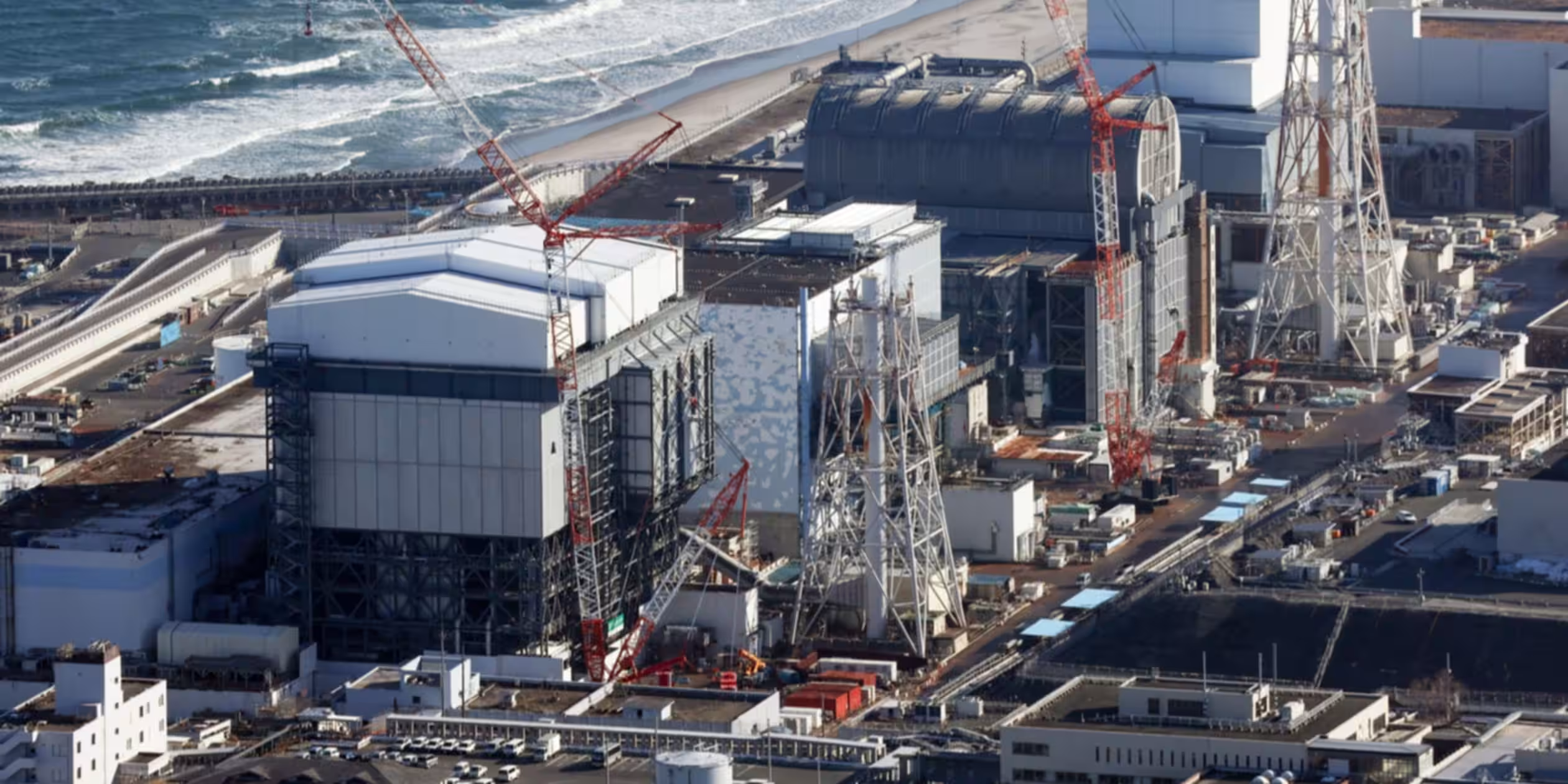
AI robots and drones to assist in Fukushima nuclear plant cleanup
5 hours ago
 AI News
Here's why old
5 hours ago
 AI News
The viral leftist teens of Campaign 2020 work for OpenAI now
6 hours ago