
Anthropic study reveals the hidden 'mind' of Claude AI
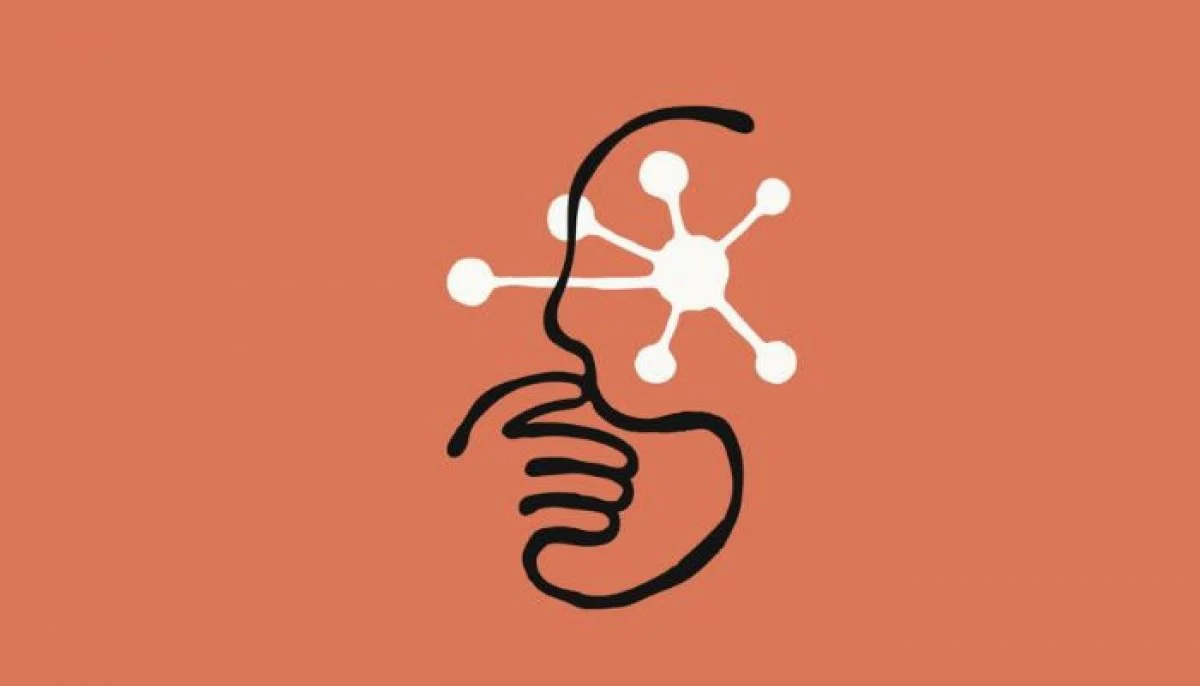
Anthropic study reveals the hidden 'mind' of Claude AI
In study, Anthropic finds brain-like ‘J-space’ in Claude
Anthropic has revealed that the modern large language models (LLMs) possess hidden internal yet “global workspace”, allowing them to ponder over the concepts.
When the Claude AI thinks, the model does not reveal those thoughts in their AI-generated responses. These thoughts stem from a small collection of internal neural patterns in Claude named J-space.
Taking to X, Anthropic posted, “In neuroscience, global workspace theory holds that thoughts become consciously accessible when they enter a privileged workspace that’s broadcast across the brain.Using a new interpretability technique, we found something similar in Claude: the J-space.”
According to the US-based artificial intelligence company, the J-space is different from Claude’s “output, or even its chain of thought text.” This space helps and allows the model to think about the different concepts without jotting them down anywhere.
Researchers highlighted that Claude’s "J-space" was an emergent property rather than a pre-programmed feature. Anthropic noted that this discovery has fundamentally shifted their understanding of the model's cognition, uncovering a specialized mental workspace capable of deliberate reasoning alongside its more routine, automatic processing functions.
In this mental workspace, the model can perform reasoning steps in its head, for instance, the model can identify images and assess bugs in code.
“Representations in the J-space can be used flexibly for many tasks—for example, once “France” has lit up in Claude’s J-space, the model can recall its capital, or its national currency, or the continent it belongs to,” Anthropic said.
The company has also clarified that while there is no evidence that Claude possesses human-like consciousness or the capacity to feel emotions, its internal processes do demonstrate "access consciousness."
“A thought is “access-conscious” (or “consciously accessible”) if you can report it, reason with it, and use it to guide what you do. It remains a contested philosophical question whether or not access consciousness implies phenomenal consciousness, or if the ability to have experiences requires some other property,” Anthropic added.
Related Stories
 AI News
Anthropic Customers Switch to Cheaper Models Ahead of IPO
15 minutes ago
 AI News
Workers in China worry over being replaced as they adapt to the growing impact of AI on jobs
15 minutes ago
 AI News
OpenAI Exec Tells People to Expect Routine AI
15 minutes ago
 AI News
Megatrends shaping the consumer landscape
1 hour ago
 AI News
Is there a pending AI ‘debt bomb’ crisis? No. This isn’t Enron 2.0 | Gene Marks
1 hour ago
 AI News
Artificial Intelligence, human dignity, and the Catholic Church
1 hour ago
 AI News
Weak early career job market due less to AI and more to remote work, U.S. economic and foreign policy
1 hour ago
 AI News
AIMX Singapore 2026 Accelerates AI Deployment Through Catalysing Industry Innovation and Advancing Global Collaborations
1 hour ago