
AI impact on biopharma valuation stays murky

Artificial intelligence (AI) has had its fits and starts over the years, with the last two featuring a more palpable surge. Shifting from fence-sitting to either FOMO, outside pressure, or internal optimism in the biopharma industry, AI has moved to the question of its actual impact on a company’s valuation. Geoff Serednesky, founder of Fishbone Advisors, an independent advisory firm, told BioXconomy, “AI and healthcare has been a conversation piece for so long, but there’s a catch-22: management struggles to show ROI on AI investments, yet not investing means falling behind.” This paradox led his company to conduct a survey and interviews among healthcare investors, with the results found in its recently released report, “Hallucinating Value: Healthcare's AI Narrative.”
The study examines five subsectors under healthcare—biotechnology, pharmaceuticals, life sciences tools and services, payers and providers, and equipment and supplies. Here we focus on investor sentiment in the biotech and pharma sectors.
Serednesky, who has served in director roles at FTI Consulting and the Brunswick Group prior to founding Fishbone, said, “There is a very big gap in the biotech industry, in particular, when it comes to the believability of the AI story, and what the investor believes that the AI story is going to contribute.”
Source: Fishbone Advisors, Healthcare Benchmarking Study, June 2026.
The report mapped out the basic correlation for AI positivity in biotech as a natural symbiosis. Biotech companies are valued on their pipelines, which are formed at a very early, data-intensive stage. And data is AI’s sweet spot, with the ability to identify patterns in complex datasets to narrow down viable targets and molecules.
Whereas, Serednesky explained, pharma is only getting high marks for AI in valuation when it can contribute to a tangible or reasonable impact on financial performance. Eli Lilly, for example, can tie numbers to its obesity franchise, add in its NVIDIA partnership, along with their overall good communication, to rank high on AI.
This communication, or narrative, is key. Serednesky offers a series of recommendations in the report to showcase how each subsector should be talking to its investors.
"For smaller-sized companies, the takeaway is much more about owning your niche and market share dominance as opposed to a broad-ranged application of say an end-to-end platform that does all the things,” said Serednesky. “Highlight your subject matter expert domain expertise that will attract the larger fish and then eventually get [you] gobbled up to integrate that technology into broader commercialization.”
For pharma, investors demand more concrete evidence of bottom-line contributions through cost reduction and operational efficiencies.
"When you take an AI initiative, and you tie it to a franchise, and you tie it to specific initiatives relative to a segment or performance or an objective, those do way better than general whitewash AI conversations,” Serednesky said.
Related Stories
 AI News
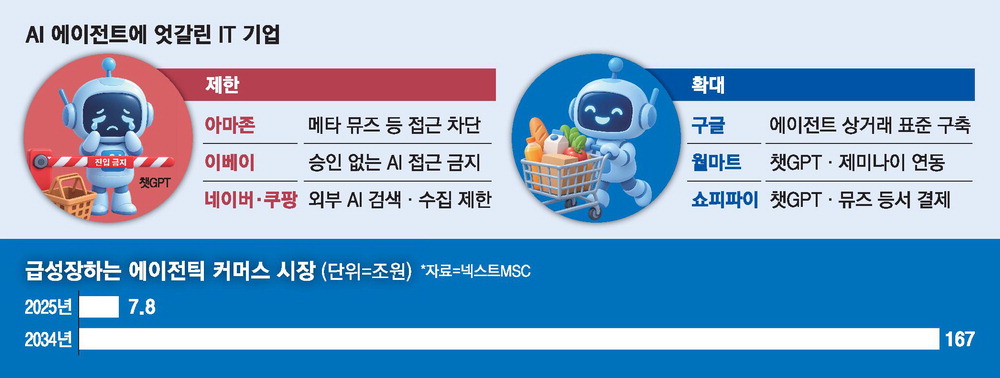
As the artificial intelligence (AI) agent market grows rapidly, the positions of commerce platforms
24 minutes ago
 AI News
Anthropic's artificial intelligence invented a murder witness and sent false information to U.S. police
25 minutes ago
 AI News
As competition for artificial intelligence (AI) development between global big tech intensifies, sec..
1 hour ago
 AI News
Anthropic’s Claude AI submits a false tip on a Philadelphia crime website
1 hour ago
 AI News
OpenAI projects $70 billion annualised revenue by year
2 hours ago
 AI News
Anthropic AI Agent Sent Fake Murder Tip to US Police, Prompting Safety Concerns
2 hours ago
 AI News
Artificial Intelligence in Clinical Decision Making: Supporting Health Professionals Without Replacing Their Judgement
2 hours ago
 AI News
Can Artificial Intelligence Help Prevent Double Land Sales in Ghana?
4 hours ago