
AI Act
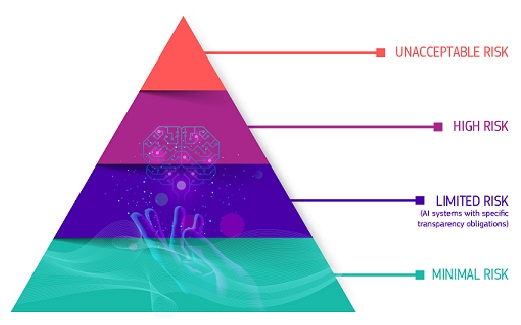
The AI Act is the first-ever legal framework on AI, which addresses the risks of AI and positions Europe to play a leading role globally.
The AI Act (Regulation (EU) 2024/1689 laying down harmonised rules on artificial intelligence) is the first-ever comprehensive legal framework on AI worldwide. The aim of the rules is to foster trustworthy AI in Europe. For any questions on the AI Act, check out the AI Act Single Information platform.
The AI Act sets out a risk-based rules for AI developers and deployers regarding specific uses of AI. The AI Act is part of a wider package of policy measures to support the development of trustworthy AI, which also includes the AI Continent Action Plan, the AI Innovation Package and the launch of AI Factories. Together, these measures guarantee safety, fundamental rights and human-centric AI, and strengthen uptake, investment and innovation in AI across the EU.
To facilitate the transition to the new regulatory framework, the Commission has launched the AI Pact, a voluntary initiative that seeks to support the future implementation, engage with stakeholders and invite AI providers and deployers from Europe and beyond to comply with the key obligations of the AI Act ahead of time. In parallel, the AI Act Service Desk is also providing information and support for a smooth and effective implementation of the AI Act across the EU.
The AI Act ensures that Europeans can trust what AI has to offer. While most AI systems pose limited to no risk and can contribute to solving many societal challenges, certain AI systems create risks that we must address to avoid undesirable outcomes.
For example, it is often not possible to find out why an AI system has made a decision or prediction and taken a particular action. So, it may become difficult to assess whether someone has been unfairly disadvantaged, such as in a hiring decision or in an application for a public benefit scheme.
Although existing legislation provides some protection, it is insufficient to address the specific challenges AI systems may bring.
The AI Act defines 4 levels of risk for AI systems:
All AI systems considered a clear threat to the safety, livelihoods and rights of people are banned. The AI Act prohibits eight practices, namely:
The prohibitions became effective in February 2025. The Commission published 2 key documents to support the practical application of the prohibited practices:
AI use cases that can pose serious risks to health, safety or fundamental rights are classified as high-risk. These high-risk use-cases include:
High-risk AI systems are subject to strict obligations before they can be put on the market:
This refers to the risks associated with a need for transparency around the use of AI. The AI Act introduces specific disclosure obligations to ensure that humans are informed when necessary to preserve trust. For instance, when using AI systems such as chatbots, humans should be made aware that they are interacting with a machine so they can take an informed decision.
Moreover, providers of generative AI have to ensure that AI-generated content is identifiable. On top of that, certain AI-generated content should be clearly and visibly labelled, namely deep fakes and text published with the purpose to inform the public on matters of public interest.
The transparency rules of the AI Act will come into effect in August 2026.
The AI Act does not introduce rules for AI that is deemed minimal or no risk. The vast majority of AI systems currently used in the EU fall into this category. This includes applications such as AI-enabled video games or spam filters.
How does it all work in practice for providers of high-risk AI systems?
Once an AI system is on the market, authorities are in charge of market surveillance, deployers ensure human oversight and monitoring, and providers have a post-market monitoring system in place. Providers and deployers will also report serious incidents and malfunctioning.
What are the rules for General-Purpose AI models?
General-purpose AI (GPAI) models can perform a wide range of tasks and are becoming the basis for many AI systems in the EU. Some of these models could carry systemic risks if they are very capable or widely used. To ensure safe and trustworthy AI, the AI Act puts in place rules for providers of such models. This includes transparency and copyright-related rules. For models that may carry systemic risks, providers should assess and mitigate these risks. The AI Act rules on GPAI became effective in August 2025.
In July 2025, the Commission published 3 key instruments to support the responsible development and deployment of GPAI models:
These tools are designed to work hand-in-hand. Together, they provide a clear and actionable framework for providers of GPAI models to comply with the AI Act, reducing administrative burden, and fostering innovation while safeguarding fundamental rights and public trust.
The Commission is also developing support other tools that offer guidance on how to comply with the AI Act’s transparency rules:
These support instruments are under preparation and will be published in the second quarter of 2026. Find out more about how the AI Office is supporting the implementation of the AI Act.
The European AI Office and authorities of the Member States are responsible for implementing, supervising and enforcing the AI Act. The AI Board, the Scientific Panel and the Advisory Forum steer and advise the AI Act’s governance. Find out more details about the Governance and enforcement of the AI Act.
The July 2026 action plan on Cybersecurity and AI sets out a coordinated approach to help Member States, businesses and public authorities address cybersecurity and resilience challenges posed by the most advanced AI models. The Commission will launch a call to increase EU evaluation capacity of AI models, before they are placed in the EU market. Expected to be operational by 2027, this will strengthen third-party assessment of AI capabilities and risks and contribute to the regulatory function of the AI Office.
The Commission and the European Union Agency for Cybersecurity (ENISA) will also create a blueprint to secure access to advanced AI systems for cybersecurity purposes and establish a secure testing platform to help organisations in critical sectors - such as energy, transport, health, finance and public administration - safely test and deploy AI solutions.
The AI Act entered into force on 1 August 2024, and will be fully applicable 2 years later on 2 August 2026, with some exceptions:
How the Commission is simplifying the AI Act implementation?
The Digital Package on Simplification proposed amendments to simplify the AI Act implementation and ensure the rules remain clear, simple, and innovation-friendly. This legislative proposal (dubbed as the 'AI omnibus') has been adopted on 19 November 2025 and a political agreement was reached on 7 May 2026.
Following the political agreement, a clear implementation timeline is set for the rules governing high-risk AI systems:
This ensures the rules apply when companies have the right support tools to facilitate implementation, such as standards.
In addition, the following amendments to the AI Act have been agreed:
All this complements AI Office actions already in place to provide clarity for businesses and national authorities. For instance, through guidelines, codes of practice, and the AI Act Service Desk.
The European AI Office and the national market surveillance authorities are responsible for...
The Commission aims to increase the number of AI experts by training and attracting more researchers...
Harmonised standards will offer legal certainty under the AI Act, support innovation, and position...
The AI Act Whistleblower Tool, empowers individuals to securely submit a report and contribute...
Related Stories
 AI News
Artificial Intelligence in Medicine: Breakthroughs, Risks, and the Future of Patient Care
22 minutes ago
 AI News
Should there be limits to AI?
22 minutes ago
 AI News
Repodo Raises €8.2M for an AI
1 hour ago
 AI News
New AI tech considered to tackle wrong
1 hour ago
 AI News
Sony and Warner Chappell Sue Anthropic Over Claude Lyric Training
1 hour ago
 AI News
The AI's assault on the stock market, "turning point" for Claude and ChatGPT
2 hours ago
 AI News
I asked ChatGPT if the S&P 500 will crash 50% due to the AI bubble and it said…
2 hours ago
 AI News
Artificial intelligence’s impact on the labor market
3 hours ago