
Africa Startup Funding Holds Steady as Early
Africa Startup Funding Holds Steady as Early-Stage Deals Dip
African startups raised between $1.3 billion and $1.4 billion in the first half of 2026, in line with the $1.4 billion recorded a year earlier, per data from TechCabal and The Big Deal, showing funding has stabilized despite a tougher venture capital market. The total was supported by a handful of large transactions, even as the number of funded startups fell sharply.
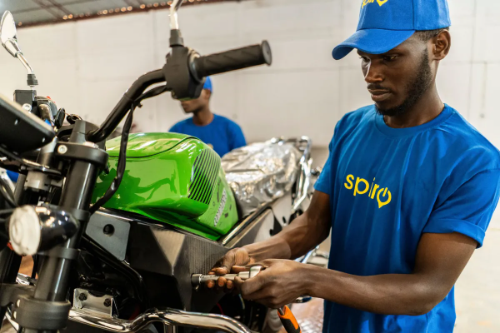
Only 146 disclosed funding deals were completed during the first six months of the year, down from 252 in the same period of 2025. Equity remained the main source of capital, accounting for about $818 million, while debt financing reached $614 million and grants totaled $9 million. The largest deal came from electric mobility company Spiro, which raised $270 million through two equity rounds in June, helping lift total funding above last year's level.
The funding mix shows investors are backing larger, more established companies with proven business models and physical assets. Electric mobility, clean energy and financial infrastructure attracted the biggest investments, while early-stage startups found it harder to raise capital. Egypt's Blnk raised $37.1 million through a mix of equity and debt, while Morocco's Agenz secured a $5 million seed round and South Africa's Zimi Charge raised $2.6 million.
Despite weaker early-stage funding, mergers and acquisitions reached a record pace. Africa recorded 63 M&A transactions in H1, almost double the 33 deals completed a year earlier. Major transactions included Flutterwave's acquisition of Mono, Paystack's purchase of Brass, and several cross-border acquisitions by African technology firms, pointing to a more active exit market and greater industry consolidation.
The report also found companies continued to cut costs and expand the use of artificial intelligence. More than 1,000 layoffs were recorded during the period, while startups increasingly used AI for customer support, fraud detection and credit scoring. At the same time, firms launched new partnerships, expanded into new markets and restructured operations as they adjusted to tighter funding conditions.
The headline funding number masks a major shift in Africa's venture capital market. Capital remains available, but investors are concentrating it in fewer companies with stronger revenues, proven business models and assets that can support debt financing. According to Africa: The Big Deal, about $1.36 billion was raised by startups receiving at least $100,000, but only 190 companies secured funding, the lowest number since the platform began tracking the market in 2021. The number of startups raising between $100,000 and $1 million fell 44%, highlighting the pressure on seed and pre-Series A companies. This creates a funding gap between angel investors and institutional venture capital that could reduce the number of startups reaching Series A and Series B over the next few years. While record exit activity is a positive sign because it gives investors liquidity and validates the market, exits alone cannot sustain the ecosystem if fewer new companies receive funding. The rise in debt financing, infrastructure investments and acquisitions suggests African venture capital is becoming more selective and more focused on capital efficiency than rapid growth. Founders seeking investment will increasingly need clear revenue growth, strong unit economics and a path to profitability rather than relying on future growth potential alone.
Related Stories
 Business
Brand Savage Redefines Professional Branding and Design With Agency-Level Quality at Startup
17 minutes ago
 Business
Charikaty Raises Pre
1 hour ago
 Business
Indian startups this week: Funding slips 3% to $258.6 million
3 hours ago
 Business
PM Modi wants BRICS to help 100 startups scale yearly; Shuddh Swad turns Bihari thekua into a Rs 1 Cr D2C business
5 hours ago
 Business
Health, AI, growth: test your business creativity with Edition 249 of our weekly quiz!
5 hours ago
 Business
What happens when you tell Jensen Huang you're quitting Nvidia
6 hours ago
 Business
Meta’s Stilla.ai Acquisition Targets Business Agent Commerce
6 hours ago
 Business
Council homes approved at Battersea Power Station
6 hours ago