
Addressing the AI Black Box Gap in Spectral Analysis

What is the new method the researchers developed in the study?
The researchers called their method Gradient-Region Analyzed Spectral SHapley Additive exPlanations (SHAP), or GRASS. This method differs from most current explainability tools because it doesn’t analyze individual data points on a spectrum.1 Instead, GRASS automatically segments high-dimensional spectral data into continuous regions using backpropagation gradient calculations, then applies the SHAP (SHapley Additive exPlanations) framework to quantify how much each region contributes to a classification decision.1
What makes GRASS unique? Why should researchers care about what GRASS is designed to do?
To understand what makes GRASS unique, it’s important to understand what existing methods are designed to do. Methods such as Grad-CAM and LIME highlight single spectral points, but they do not capture how adjacent spectral features interact to drive a model's output.1,2 GRASS is designed to expose those synergistic relationships, reducing noise interference and producing explanations that align with known molecular vibration modes.1
The researchers tested GRASS on a data set of 3,000 Raman spectra drawn from six substances: Paraquat, Tricyclazole, Thiram, and three pairwise mixtures of those specific compounds. The key spectral regions flagged by GRASS corresponded closely to the molecular signatures expected for each substance, lending physical credibility to the model's decisions rather than treating them as opaque outputs.1
The method also demonstrated broad compatibility. Tests confirmed consistent performance across multiple data normalization strategies, different neural network architectures, including Transformers and convolutional neural networks (CNNs), and remote sensing hyperspectral data sets such as the Indian Pines benchmark.1
What are the key limitations of this study?
Despite the success of their method against the sample set, the researchers acknowledged one main limitation in their study. The limitation in the study was that the Monte Carlo sampling step within SHAP carries significant computational overhead, which constrains real-time deployment.1 The researchers noted that efficient approximation algorithms could address this in future iterations.1
For industries where classification errors carry legal or safety consequences, the ability to audit and justify a model's reasoning is not a convenience but a regulatory and operational necessity. GRASS is designed to offer a structured path toward that standard.
Related Stories
 Explainers
What is the Garvaghy Road dispute all about?
12 hours ago
 Explainers
Deadlocked jury in case of U.S. mother who killed her kids ends 5th day of deliberations with no verdict
16 hours ago
 Explainers
What is Iran’s Castle Breaker missile, used against US bases?
23 hours ago
 Explainers
From code to diagrams: Agentic architecture documentation with Amazon Bedrock AgentCore
23 hours ago
 Explainers
What is the Hull Heat Network all about?
1 day ago
 Explainers
Maximizing Your Financial Growth with Expert Investment Advice
2 days ago
 Explainers
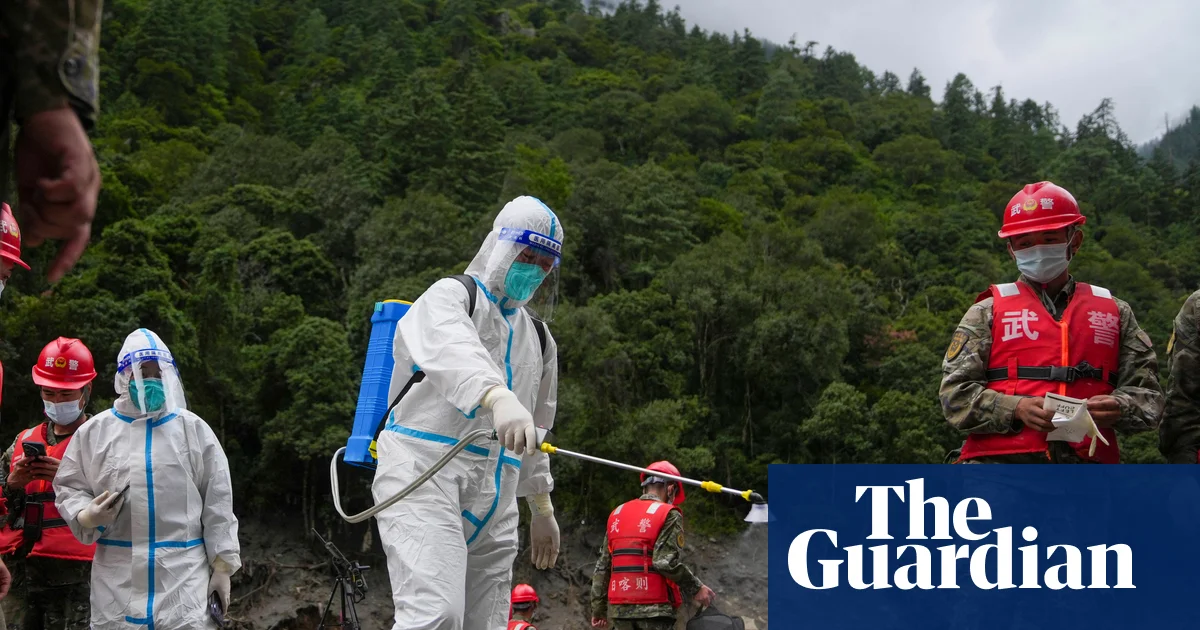
China is concealing scale of flood disaster, say Tibet campaigners
3 days ago
 Explainers
Everyone’s talking about culture, but what is Quebec doing to promote it? One organization lists its demands
3 days ago