
18 years of Cornerstone

Paul Fraser finds out how Cornerstone went from five people in a mini to building the technology business of the future.
Five people handed in their notices on June 8, 2008, returned their company cars and climbed into Michelle Petty's Mini Cooper.
Chris Petty, Chris Bibby, Chris Clark, John Storey and Michelle had left established careers in the IT industry to pursue an idea they believed could become something very different.
Their first destination was the pub; their next was a new office on Thornaby Industrial Estate.
18 years later, the business they were setting out to build has grown into the multi-award-winning Cornerstone group of companies.
The technology industry was changing. IT and telecommunications networks were beginning to converge, but at the same time many IT providers were becoming larger.
The founders believed something important was being lost along the way — personal and local customer service.
"We could see IT and telecoms coming together," said Chris, a Cornerstone director. "But we could also see IT companies getting bigger and the focus moving away from local customer service. We thought there was an opportunity to do things differently."
What nobody could have predicted was the timing. Cornerstone launched that summer of 2008, just as the credit crunch was beginning to take hold.
The original business model relied significantly on leasing technology to customers. As banks stopped lending, that plan changed almost overnight.
Chris had started the company using a £25,000 loan secured against his home. With the first month's salaries and overheads costing around £12,000, there was little room for error.
Then came an even bigger threat. Despite believing that an agreement would allow the new company and its former employer to continue working together, Cornerstone found itself facing legal action designed to prevent it from trading with former customers.
On arriving at court, Chris' barrister asked how much equity he had in his home. If the case was lost, the damages being pursued could potentially bankrupt him, cost him his home and finish Cornerstone almost before it had begun.
The court also awarded Cornerstone its legal costs. An old Facebook photograph from that evening shows Chris holding a glass of wine celebrating what he described at the time as 'the day Cornerstone could finally trade'.
There was still, however, the small matter of surviving the worst financial crisis in generations.
With its original business plan disrupted by the credit crunch, Cornerstone made a decision that would define the next 18 years.
It concentrated on service and made sure people knew about this it through PR and marketing.
That strategy wasn't universally supported.
"My argument was that we could get through the credit crunch," Chris said.
"I would rather come through it making no profit but still have a strong team capable of servicing our clients better than our competition."
In reality, Cornerstone did worse than making no profit. It lost £58,000 in its first year — but it survived. And as Cornerstone passed its first anniversary, customers who had initially been frightened away by predictions that the new business wouldn't survive three months, began returning.
Confidence was growing. Then came a moment that helped change perceptions of the company. Cornerstone had entered a business awards competition at Middlesbrough FC and reached the final of the customer service category.
Sitting at the awards dinner, Michelle noticed that after each winner was announced, the host interviewed them and appeared to know a remarkable amount about their business.
"She asked me whether I'd been interviewed beforehand," Chris said. "I said no and Michelle said, 'sorry, but I don't think you've won then'.
She was wrong. Cornerstone won the customer service category and £500.
Then, after all the category winners had been announced, the overall winner was revealed — the best small business across the competition.
(Image: Cornerstone Business Solutions)
Cornerstone won again, collecting another £1,000.
"The party that night was a good one," Chris said. More importantly, the resulting press coverage marked the beginning of Cornerstone's reputation as a multi-award-winning North East business. Further recognition followed.
Through the Entrepreneurs' Forum's 'If We Can, You Can' competition, Chris represented the Teesside region and was eventually voted New Entrepreneur of the Year.
The prize included champagne, a handheld digital camera and a large canvas portrait from the competition's marketing campaign.
In the photograph, Chris is holding what was then the newly released iPhone — an appropriate symbol of the merging IT and telecommunications world Cornerstone had been created to serve. That canvas still hangs on his office wall today.
Cornerstone later found itself shortlisted for three categories at the prestigious North East Business Awards.
"We were a little star-struck," Chris said. "These were big businesses we knew and respected, and suddenly Cornerstone was sitting there alongside them."
Once again, it was customer service that brought home the award.
Success meant Cornerstone quickly outgrew its original premises and moved to MAP House on Preston Farm in Stockton.
Initially, the company occupied only part of a large ground-floor shell.
"We rattled around in it," said Chris. "It was quite expensive for us at the time, but we wanted somewhere we could grow into."
The new premises included offices, stores, meeting facilities and a technical workshop.
Cornerstone did indeed grow into it, and through it, with a wall being knocked down so the company could take additional office space.
The workshop expanded too, eventually taking over Chris' office and forcing him into the smaller former workshop.
"The business literally grew through the walls," he said. By 2019, Cornerstone Business Solutions was established and continuing to grow.
People regularly asked the same question:
"Who does your marketing? You seem to be everywhere." The answer was Cornerstone itself.
"We thought, if people keep asking us who does our marketing, why don't we do it for other businesses?" Chris said.
That simple conversation became Cornerstone Marketing Solutions, founded in 2019 by Chris, fellow director Chris Bibby and Jamie Tinkler.
The agency developed around three core services — social media, website development and video, before expanding into branding, photography and digital advertising.
In a fitting echo of the original company, Cornerstone Marketing Solutions has subsequently become an award-winning business in its own right, including recognition for customer service.
For Cornerstone, it represented a full-circle moment. The marketing strategy some had questioned during the difficult first year had ultimately become a business itself.
For many organisations, 2020 was devastating. Cornerstone was fortunate to operate in an industry that suddenly became essential.
Millions of people who weren't furloughed needed to work from home. Businesses urgently required laptops, remote access, Microsoft Teams, Zoom and the infrastructure to keep operating outside traditional offices.
Demand for Cornerstone Business Solutions surged.
"We'd talked about video conferencing for years," said Chris. "Covid happened and suddenly the whole world understood it."
Cornerstone also made a decision about its people. Where furlough support covered 80 per cent of eligible wages within the scheme rules, Cornerstone ensured employees continued receiving 100 per cent of their normal salaries, topping up where necessary.
The ability to do so reflected a longstanding policy of retaining profits and maintaining financial strength within the business.
"We didn't want our people worrying about losing part of their income when everybody was already worried about everything else that was happening," Chris said.
It echoed the decision made during the credit crunch to protect the team rather than prioritise short-term profit.
During the pandemic, Cornerstone Visual Media Solutions was established. Its first projects were anything but modest.
One of the earliest customers was Teesside International Airport during its major redevelopment, where Cornerstone supplied an LED display wall behind the check-in desks capable of displaying passenger information and advertising.
The company then secured a project to install what was, at the time, described as the largest LED screen in the North of England, positioned on the bridge at the entrance to the Teesworks site. Visual Media has continued growing, with Cornerstone now also operating digital advertising screens across the North East.
"We've never created companies simply for the sake of creating them," said director Chris Bibby. "Usually we've seen an opportunity where we believe our experience can add something, and if it makes commercial sense, we've been prepared to invest and have a go."
By 2020, MAP House could no longer contain the expanding businesses.
Cornerstone House was developed to include a state-of-the-art technical workshop for Business Solutions, a large boardroom, video-conferencing facilities and meeting rooms downstairs, with marketing and other Cornerstone businesses upstairs.
And one slightly less conventional corporate facility. A pub.
The in-house bar was designed as somewhere to entertain clients and bring employees together, reflecting on the social culture the business wanted its headquarters to have. The property acquisition also resulted in another venture, Cornerstone Commercial Property Solutions, established by the two Chris' with an ambition to develop a commercial property portfolio.
Cornerstone House — designed to be state-of-the-art. (Image: Cornerstone)
Cornerstone had progressed from five people leaving their jobs and heading to a small rented office in Michelle's Mini, to owning the building from which a growing group of companies operated.
As the businesses continued generating profits, opportunities were sought to reinvest some of those profits into assets and new income streams.
Its first property, Peace Cottage in Flamborough, is a characterful stone-built cottage dating from around 1780, transformed into a luxury holiday let complete with a wood-fired hot tub.
It is another very different sector operating under an increasingly familiar North East name.
Despite everything that happened during the previous 18 years, Cornerstone's directors believe some of the most significant change is still ahead.
Last year, Cornerstone Business Solutions developed a new five-year growth plan based partly around cyber security and artificial intelligence.
Cornerstone has already developed its own cyber-security package, Cornerstone Protect, and cyber has become one of the fastest-growing areas of the business. The company is also expanding its sales operation and strengthening mobile communications to provide customers with a genuine one-stop shop for their technology requirements.
Three new people are joining across Business Solutions and Marketing, while last month marked another important step — the arrival of an experienced chief technology officer with an established track record.
The role will help Cornerstone look beyond the technology customers need today and towards AI, AI security and the services businesses may require several years from now.
Chris Bibby says the strength of the team will be fundamental to the next chapter.
He said; "We're proud of where Cornerstone has come from, but we're probably even more excited about where it can go next.
"We've continued investing in people and we've got some very experienced people joining an already strong team."
There is no shortage of interest in Cornerstone from potential acquirers.
And Chris Petty says approaches about selling the business arrive regularly. But an exit isn't the plan. "Of course we want to grow and we've set ourselves ambitious targets," he says. "But growth isn't the most important thing. The most important thing is that as we grow, we don't lose what Cornerstone is about."
It brings the story back to June 2008.
Cornerstone was founded partly because its founders believed technology companies were becoming larger while customer service was becoming less personal.
To see this interview in the latest BUSINESSiQ magazine, you can get a free copy delivered to your office or home each quarter by subscribing HERE, or you can read all of our magazines online HERE.
Eighteen years later, the challenge is to grow significantly without becoming the type of business Cornerstone originally set out to compete against.
"Technology has changed beyond recognition since we started," Chris said. "We've gone through a financial crash, Covid, cloud computing, cyber security and now AI. There will always be something new, but looking after customers shouldn't change."
Cornerstone's first 18 years have rarely followed the original business plan. The next five probably won't either.
As Chris said; "We're excited about AI, AI security and where all the Cornerstone businesses go next. And who knows what Cornerstone company might show up next?"
Cornerstone House, Unit 31 Falcon Court, Preston Farm Industrial Estate, Stockton-on-TeesTS18 3TS
Related Stories
 Business
David Raynor launches Funding Atlas for global funding
3 hours ago
 Business
How to ‘manufacture’ an Ivy League applicant
5 hours ago
 Business
ZAWYA: Dubai Chamber to enhance funding for 7 digital startups
5 hours ago
 Business
Midwich Australia and Blonde Robot Unite to Deliver
6 hours ago
 Business
Kerry
10 hours ago
 Business
Friedrich Merz vows to stay in office after CDU ‘disaster’ in German state elections
12 hours ago
 Business
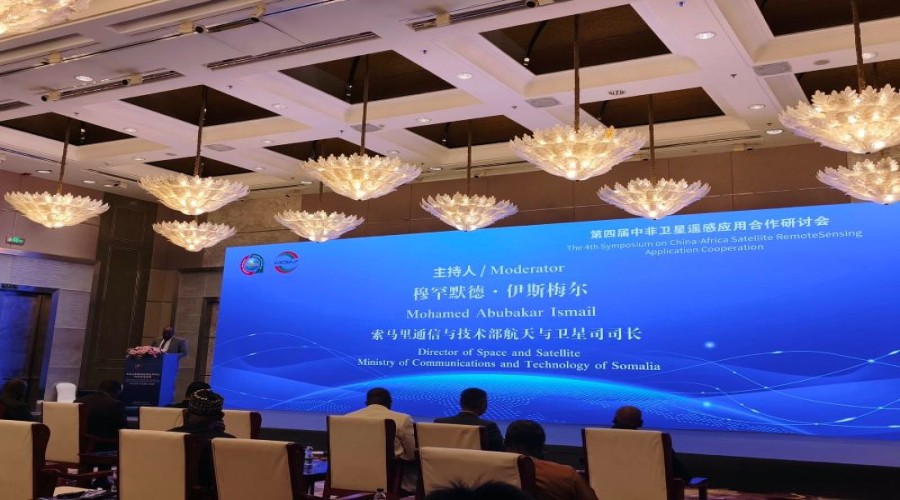
Somalia spotlights satellite remote sensing cooperation at China
12 hours ago
 Business
Another MLA leaves BC Conservative caucus as potential snap election looms
13 hours ago